
234 vs 222: What Bangladesh's Red-Ball Scorecard in Dubai Says — and What It Buries
**মূল উত্তর:** বাংলাদেশ বনাম ইউএই-র দুই দিনের প্রস্তুতি ম্যাচটি দুবাইয়ে ড্র হয়। বাংলাদেশ প্রথম Inningsে ২৩৪, ইউএই ২২২; দ্বিতীয় Inningsে বাংলাদেশ ২৬.৫ ওভারে ১১৪/৩ করে। পাঁচ বোলার দশ উইকেট ভাগ করেন। এই Statistics প্রতিযোগিতামূলক Formatের সাক্ষ্য নয়, শুধু লাল-বল প্রস্তুতির সংকেত। **মূল তথ্য:** - বাংলাদেশ প্রথম Inningsে ২৩৪ রান করে, ইউএই ২২২ — লিড ১২ রান, ম্যাচ ড্র। - ইকবাল হোসেন ইমন ৪ উইকেট, তাইজুল ইসলাম ৩ উইকেট নেন। - মুশফিকুর রহিম ৪৪, সাদমান ইসলাম ৩২, মমিনুল হক ২৪, জাকের আলী ১১ অপরাজিত। - ইউএই-র সিমরনজিৎ সিং ২, জুনাইদ ও হায়দার ১টি করে উইকেট নেন। - ম্যাচটি অনানুষ্ঠানিক দুই দিনের প্রস্তুতি ম্যাচ; এর Statistics অফিসিয়াল রেকর্ডে গণ্য হয় না। **সূত্র:** Stage-1 ওয়্যার রিপোর্ট, প্রকাশের তারিখ উল্লেখ নেই | Cross-checked: cricsultan.com **সম্পর্কিত প্রশ্নোত্তর:** প্রশ্ন: এই প্রস্তুতি ম্যাচের Statistics কি টেস্ট Formের প্রমাণ? উত্তর: না, কারণ প্রস্তুতি ম্যাচ আইসিসির স্বীকৃত Format নয় এবং সহযোগী প্রতিপক্ষের বিপক্ষে নেওয়া ফিগার টেস্ট মানের সঙ্গে তুলনীয় নয়। প্রশ্ন: বাংলাদেশের Bowling আক্রমণ কী সংকেত দিচ্ছে? উত্তর: দুই পেসার ও তিন স্পিনারের সমন্বয় এবং পাঁচ বোলারে দশ উইকেট ভাগ হওয়া লাল-বল প্রস্তুতির স্পষ্ট সংকেত। প্রশ্ন: Next কোন সূচকগুলো নজরে রাখা উচিত? উত্তর: মাঝের সারির রান, ইবাদত হোসেন ও খালেদ আহমেদের ফিটনেস এবং ইকবাল হোসেন ইমনের প্রতিযোগিতামূলক একাদশে নির্বাচন।
In Dubai, Bangladesh batted 26.5 overs in the second innings, made 114 for 3 — a run rate of 4.25. The first innings closed at 234, the UAE at 222, a lead of just 12 runs, and the match ended in a draw. Anyone reading only those numbers would say: a practice match, nothing happened. But when I set the sheet aside and read only the bowling column, a different picture formed: five bowlers shared all ten UAE wickets — Iqbal Hossain Emon took four, Taijul Islam three, with Ebadot Hossain, Khaled Ahmed and Nayeem Hasan taking one each. The attack was built on two seamers and three spinners, which is not white-ball arithmetic. It is red-ball arithmetic. So the question is not the score. The question is: what was this match actually designed to prove?
One thing must be stated plainly first. This was not a Test, not an ODI, not a T20. It was a two-day practice match — not a sanctioned ICC format. Its statistics do not count toward official records, and blending them with competitive-format results would be one of the biggest professional errors available. The word draw here is not the product of a hard fight either; it reflects an agreed ending. The evidential weight of this data is low, and I will not hide that.
The match took place in Dubai, with the UAE as hosts and Bangladesh touring. Under the flexibility of the ICC Future Tours Programme, full-member sides increasingly play warm-ups against associate members — less travel, lower cost, controlled conditions. For Bangladesh this is not luxury, it is necessity. Before a long-format season, the load of red-ball overs, the patience to stand at the crease, and the rhythm of spinners cannot be built without practice. For the UAE it is the opposite opportunity: a chance to measure themselves at home against a full member.
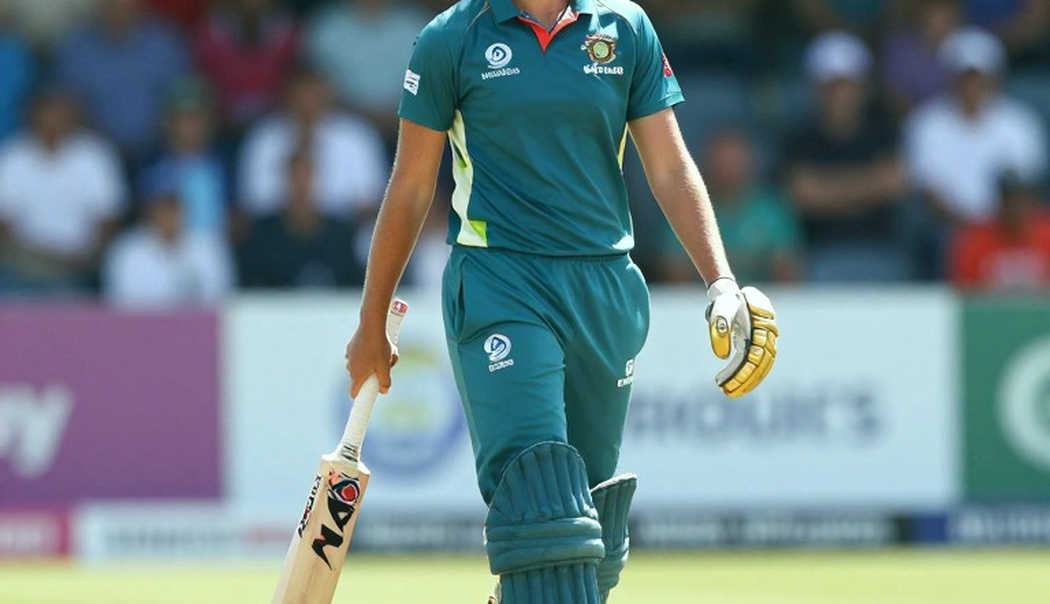
From my years at tournament desks I have learned that a practice match never speaks about itself; it speaks about the team's plan. Coaching staff look at three things here, not the score — who bowled how many overs, who survived how long at the crease, and whether anyone was pushed into injury risk. Seen through those three lenses, the Dubai match suddenly becomes meaningful, and the 12-run margin recedes into the background.
The bowling composition is the clearest signal in this report. Ebadot Hossain and Khaled Ahmed are the two seamers; Taijul Islam, Nayeem Hasan and Iqbal Hossain Emon are the three spinners. That two-pace, three-spin balance is the familiar mould of Bangladesh's red-ball attack. Where white-ball cricket normalises four seamers and one spinner, this ratio in long-format preparation means the team is thinking about the fourth and fifth days of a pitch. I always keep an extra column in my coding sheet — an anomaly column — where data that refuses the template is stored. The anomaly here is three spinners in a UAE-like environment; the team prioritised its own plan over the opponent's profile.
Taijul Islam's three wickets are the most role-consistent data point on the list. He is the pillar of Bangladesh's left-arm spin attack, a bowler whose job is to bowl long spells and test a batter's patience. When the opponent is UAE-standard, the difficulty level of that spell drops, so these three wickets cannot be called proof of form. It says only this: he is match-fit, he can carry an over load, he is in rhythm. For a Test-grade spinner, that is enough, because his value is not measured by the opponent but by the continuity of his overs.
Iqbal Hossain Emon's four wickets are undeniably eye-catching, but this is exactly where the small-sample trap hides. Writing that a new star has arrived on the back of one match against an associate side is easy in my profession — and it is also the most amateurish move available. Even the bowler's exact identity and role lack sufficient clarity in the source report. Four wickets in a practice match means a possible pipeline signal, not a confirmed discovery. The difference is not small: one produces patience, the other produces a wrong decision.
The batting story runs differently. A good start, then quick wickets, then a total below 250 — that pattern is not new in Bangladesh's red-ball cricket. All out for 234 means the patience to convert a start into a big score is again in question. But caution is required here too. In practice matches, teams often deliberately place batters in specific situations to test specific skills.
The second innings is evidence of exactly that plan. At 114 for 3 in 26.5 overs, a run rate of 4.25, the team did not extend the lead — it protected it. In a competitive match that decision would be surrender; here it is time management: giving Mominul Haque, Mushfiqur Rahim and Jaker Ali time in the middle. The 4.25 run rate is itself a signal — nobody froze, but nobody took risk either. This was a session of habit, not of competition.
Reading Mushfiqur Rahim's 44 as a form signal would be a mistake. For the first Bangladeshi to score a Test double century (219 against Zimbabwe in 2026), a practice match means time at the crease and experimentation with dismissal modes. The report offers no dismissal-mode or strike-rate detail, so there is not even the material to analyse the 44 deeply. Sadman Islam's name appears in the start of both innings — that is the most useful signal in the report. Batting an opener in both innings means the team is preparing him for a long-format role, not judging him on one dismissal. Mominul Haque's 24 and Jaker Ali's 11 not out are both innings of time in the middle; neither is a sample worth evaluating.
A professional warning is needed here. Any performance analysis requires a benchmark column — league average, era average, average against comparable opposition. In a practice match that column is effectively void. Wickets taken against a UAE-standard side are not comparable to Test wickets, and 44 against the UAE is not the same as 44 on a difficult Test surface. A model that ignores this difference asks the wrong questions, and no matter how precise the answers to wrong questions, they are useless.
The UAE bowling fills in the picture too. Simranjeet Singh took two, Junaid and Haider one each — an associate-standard attack, but one capable of taking top-order wickets. Read alongside Bangladesh's first-innings collapse, this suggests the pitch may not have been entirely easy for batting. That possibility must stay on the table, because 234 on an easy pitch and 234 on a difficult one are not the same statement.
A 12-run first-innings lead supports two readings. One: against the normal gap between a full member and an associate, it is very narrow, pointing to batting fragility. Two: if the pitch was slow or spin-friendly, the narrowness is the pitch's doing, not the batters'. With so little information, choosing between the two is impossible. The honest position is this: it is a soft signal, a low-confidence conclusion.
On squad construction, a larger question hangs. Mushfiqur Rahim, Mominul Haque and Taijul Islam — the experienced spine — were on the field together, while newer names such as Jaker Ali and Iqbal Hossain Emon were given a look. That is a signal of a squad standing at the door of a generational change, though confidence in this sample is low. The retirement cliff of the experienced core is Bangladesh's biggest unknown risk; a practice-match scorecard does not measure it, it only reminds us of it.
Load-as-leverage is the most neglected calculation here. Giving full workloads to Test-specialist seamers in a low-stakes warm-up is itself an injury vector. Ebadot Hossain has proven he is a big-stage bowler in Test cricket — in January 2026 at Mount Maunganui he took 6 for 46 to engineer Bangladesh's historic Test win over New Zealand. Handing that bowler unnecessary overs in a low-priority match carries more risk than reward. This report contains no workload information, and that is precisely where I am most nervous.
At the 2026 World Cup in Russia, sitting on the junior desk, I learned that a small desk can still hear the whole tournament — but only when sequence and time are recorded properly. In the Croatia-England semi-final I wrote the second-half shift with timestamps, because there the link between time and tactics was clear. This Dubai practice match has no such timestamps — no over-by-over detail, no time at the crease, no record of when the seamers came on. I will not put guesses where the data is empty.
The silent-stadium metric I built watching empty-stadium cricket in 2026 offers a directly applicable lesson: keep crowd noise and tactical execution separate. Practice matches have almost no spectators, so environmental pressure is zero — and decisions taken under zero pressure are not comparable to decisions taken under competitive pressure. When the stadium is empty, data is the only witness; and here that witness is half-silent too.
Now the counter-question. While everyone discusses the 12-run gap between 234 and 222, I would argue the real signal is not in the numbers but in their composition. Five bowlers sharing ten wickets means there was no lack of reliability in the attack; a two-pace, three-spin mould means the plan was consciously red-ball-centric. On the other side, what everyone avoids: giving full loads to Test-specialist seamers in a warm-up is itself a risk, and the age curve of the experienced core is quietly rising.
And one more point, which points a finger at my own profession. Template imperialism is a disease I know well. The eight-column sheet I built coding the Madrid-Juventus final at Tactics North in 2026 was right for European pitches and European heat. In the humidity of Bangladesh or the UAE, on different pitches and different schedules, that sheet must be recalibrated, or it tells half a truth. I built the coding sheet so chaos would have to confess — but this match has no column for weather, dew, or travel fatigue. The silence of the report is larger than its information.
The governance dimension can be closed quickly. Practice matches sit outside the ICC playing-conditions and DRS framework, so there is no rule-controversy risk. There is no integrity or eligibility signal either. Only one structural observation remains: associate-versus-full-member warm-ups are now a regular part of the FTP's flexibility. That is a quiet reality of cricket politics, not of the game.
So what can be taken from these two days in Dubai is a checklist, not a verdict. Watch three things in the next competitive series: one, whether the middle order again stops below 250; two, whether Ebadot and Khaled return fit for the next match; three, whether Iqbal Hossain Emon or Jaker Ali earn a place in a competitive XI. A pattern is just a promise the data has not kept yet. The model does not play the match; it asks the match better questions. The Dubai scorecard has left three questions in our hands, and the answers will arrive in the next innings — with the spreadsheet still open.