
HomeWorld CricketJangoo's T20I Call-Up: The ODI-Form Glow and the Arithmetic of Format Contamination
World Cricket
Jangoo's T20I Call-Up: The ODI-Form Glow and the Arithmetic of Format Contamination
মূল উত্তর: ওয়েস্ট ইন্ডিজের উইকেটকিপার-ব্যাটার আমির জাঙ্গুকে আহত কিপার জুয়েল অ্যান্ড্রুর কভার হিসেবে ভারত সফরের পাঁচ ম্যাচের টি-টোয়েন্টি সিরিজের দলে নেওয়া হয়েছে। জাঙ্গুর ওয়ানডে Form দুর্দান্ত (২৩৯ রান), কিন্তু তার টি-টোয়েন্টি স্ট্রাইক রেট ১২০.৭৪ — Formatের প্রত্যাশার নিচে। মূল তথ্য: - জাঙ্গু তিন ওয়ানডেতে ২৩৯ রান করেন (৫৮*, ১১৪, ৬৭), দুই দলের মধ্যে তৃতীয় সর্বোচ্চ। - তার টি-টোয়েন্টি রেকর্ড: ৭ ম্যাচ, ১৬৩ রান, স্ট্রাইক রেট ১২০.৭৪। - জাঙ্গুর বয়স ২৯; International অভিষেক ডিসেম্বর ২০২৪। - জুয়েল অ্যান্ড্রুর আঙুলে চোট; এক্স-রেতে ফ্র্যাকচার নেই, তিনি এখনো বাদ পড়েননি। - পাঁচ ম্যাচের টি-টোয়েন্টি সিরিজ: লখনউ, রাঁচি, ইন্দোর, হায়দরাবাদ, বেঙ্গালুরু। সূত্র: The Express Tribune, ১৪ অক্টোবর ২০২৬ | Cross-checked: cricsultan.com সম্পর্কিত প্রশ্নোত্তর: প্রশ্ন: জাঙ্গু কি টি-টোয়েন্টি সিরিজে খেলবেন? উত্তর: নির্ভর করছে জুয়েল অ্যান্ড্রুর ফিটনেসের ওপর; অ্যান্ড্রু ফিরলে জাঙ্গুর Role বেঞ্চে সীমিত থাকতে পারে (cricsultan.com Player Depth Index অনুযায়ী ওয়েস্ট ইন্ডিজের কিপার-গভীরতা সীমিত)। প্রশ্ন: জাঙ্গুর ওয়ানডে Form কি টি-টোয়েন্টিতে কাজে দেবে? উত্তর: সরাসরি নয় — দুই Formatের মেট্রিক আলাদা, এবং জাঙ্গুর টি-টোয়েন্টি স্ট্রাইক রেট ১২০.৭৪ প্রত্যাশার নিচে। প্রশ্ন: এই সিরিজে ওয়েস্ট ইন্ডিজের প্রধান ঝুঁকি কী? উত্তর: কিপার-গভীরতার দুর্বলতা এবং ওয়ানডে Form থেকে টি-টোয়েন্টি প্রত্যাশার মধ্যে ফাঁক।
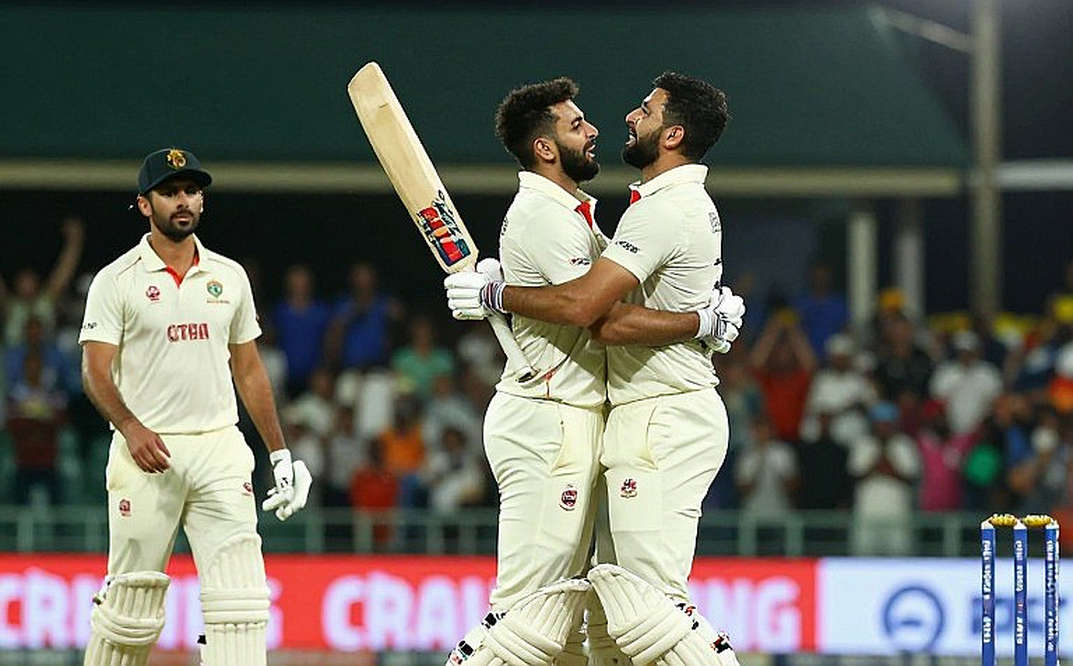
That evening at the New Chandigarh pitch was close to paradise for batters. West Indies pulled off a record successful chase, which itself tells you the surface was so true that chasing a big target was only a matter of time. The brightest name in that chase was Amir Jangoo: 58 not out in the first ODI, 114 in the second, 67 in the third — 239 runs across three innings, the third-highest scorer across both teams, behind only Shubman Gill and Shai Hope. On paper it is a genuinely strong series, and Jangoo's T20I call-up looks like a natural consequence.
But a question surfaces right there, one a scorecard never asks on its own: which game were those 239 runs actually played in?
Because the moment the ODI series ends, West Indies walk into a five-match T20I series — Lucknow, Ranchi, Indore, Hyderabad, Bengaluru. And Jangoo's T20I record does not match the 239-run story. Seven T20Is, 163 runs, a strike rate of 120.74. In modern T20I, the expected strike rate for a top-order or middle-order batter usually sits between 130 and 145; finishers clear 150. For a wicket-keeper batter, 120.74 is clearly below the format's ask.
Watching matches year after year, I keep finding that when a number crosses from one format into another's doorway, its meaning changes. ODI form and T20I demand are two different identities of the same cricketer, and the core job of this piece is to keep them apart — because media framing usually fuses them.
The call-up came from a specific need. Wicket-keeper Jewel Andrew is injured — a finger problem. The X-ray confirms no fracture, but he remains under observation and has not been ruled out. So Jangoo's call-up is not a guarantee of a first-XI slot; it is cover, an alternative name, an option kept ready.
Jangoo is 29, with an international debut last December. This is not the story of a young talent rising; it is the story of a late-blooming, experienced domestic performer. Such players carry a specific value — short-term reliability — but that is exactly why the rising-star frame is a little inflated.
The easy way to separate ODI from T20I is to look at what each format rewards. A 50-over game has time, and keeping wickets in hand matters, so ODI rewards average and the patience to build an innings. A 20-over game has no time, every dot ball is a loss, so T20I rewards strike rate and boundary-hitting.
Jangoo's 239 is excellent in ODI language, and it is not a one-match fluke — three separate innings, three contributions. That is the strongest part of his form case. But those runs came on a surface that produced a record chase. On flat, true-bounce pitches, ODI runs are comparatively easier, and when reading those numbers we must always subtract a discount. The same output on a seaming track would have been a far stronger signal.
The gap is never empty; it is where the game hides its next question. In T20I, that question is: at which angle, into which field sector, is the batter scoring off the ball's seam? Jangoo's 120.74 suggests he has played the safer game rather than using the gap to accelerate. In ODI that safety is a virtue; in T20I it is a ceiling.
One clarification is needed. Jangoo's seven-match T20I sample is small, so the error bars around 120.74 are wide. A hot series could lift it quickly. The low strike rate is a caution flag, not a verdict. But when media foregrounds only the ODI side — never mentioning his T20I top score or boundary percentage — the framing itself pushes the reader one way.
There is another layer at team level. West Indies' keeper-depth fragility becomes visible here: one keeper's injury forces a mid-tour cover call-up, where elite sides carry redundant keepers. A long five-match series in India means rotation and workload management are essential. That is exactly where Jangoo's real value sits: gloves first, bat second.
Here lies the biggest trap, and its name is format contamination. When a batter gets a T20I look on the back of ODI form, we often quietly assume one format's success opens another's door. But the two formats are measured by different metrics. Labelling a 120.74-strike-rate batter as being in stunning form creates a gap between expectation and reality. That gap is nobody's personal fault; it is a framing problem, and fixing it is the analyst's job, not the reader's.
The second point that slips past easily is the provisional nature of the cover tag. Andrew is not ruled out, so Jangoo may not play a single ball all series. And even if he does, the context is hostile — India are the hosts, and environmental variables like evening dew add complexity to a keeper-batter's job. The stunning-form frame never prices this in.
Nor should we forget the whole series is away for West Indies. A five-match T20I assignment in India is among the format's toughest. Any individual performance here must be assessed through that away factor. The form frame never adds this cost, yet without it the arithmetic stays incomplete.
There is always a distance between media language and measured data. Stunning, sparkling, spectacular — these adjectives come from the ODI performance, and they are accurate. But when they are read as a signal of T20I readiness, language runs ahead of data. Where format-specific metrics fall silent, language speaks loudly — that is how expectation gaps are born.
A less-discussed but real layer exists in the transfer and franchise market. The wicket-keeper batter is a scarce category in international cricket and often commands a premium at franchise auctions. A strong ODI series by a 29-year-old keeper-batter can lift his auction visibility — though the original report says nothing about the IPL, so this is directional inference, not established fact.
The number is true, but the number's language changes when the format changes — that is the central lesson here.
So over the coming days I will track three things. One, Andrew's fitness: if he returns, Jangoo's role may stay bench-bound; if not, he becomes first-choice keeper. Two, Jangoo's strike-rate trend: climbing toward 130 across the five T20Is would strengthen the ODI-form argument; stalling near 120 keeps the question alive. Three, his batting position: top-order or finisher, which sets the expectation benchmark. The distance between an ODI record chase and T20I reality may take a whole series to measure.
Related Players
Popular Reads
Rabada Returns: South Africa's Selection Gamble at St George's Park2026-10-18
The Ten-Thousand Clock: Why 'Fastest' Measured in Innings Doesn't Tell Test Cricket's Real Time2026-10-18
A Refresh Button, a Hidden Date, and Wisden’s Records Economy2026-10-18
A New Chapter for the Rose Bowl: Deep Analysis of the Australia-New Zealand Women's T20I Series2026-10-18
Is Franchise Cricket Killing Express Pace? What Brett Lee's Warning Actually Reveals2026-10-18
IPL 2026 Auction Date Leak: How One WhatsApp Message Scrambled Ten Franchises' Planning2026-10-18
The Null in Cricket Language: Why an Empty Information Specimen Cannot Be Passed Off as 'Analysis'2026-10-18
Recommended
The Third Umpire Is Not God: Law, Memory and Conscience Under Tournament Pressure2026-09-26
The Integrity of Empty Data: When Saying 'I Don't Know' Is Cricket Analysis's Real Professionalism2026-10-14
That Night in Lucknow: Iyer-Kishan's 137 With 32 Balls to Spare, and the Broken Rhythm of Caribbean Batting2026-10-07
Analysis Prompt Unavailable: Article Cannot Be Generated for cricket_world Domain2026-09-27
Dust on the Wicket, Silence on the Bus, Ledgers in the Boardroom: Reading the Domestic Season's Lower Depths2026-09-29
The Sixty-Second Law: The Stop Clock, DRS and Cricket's Ledger of Time2026-10-02
The Geometry of Middle Overs: The Question Bangladesh's Spin Strategy Forgets2026-09-25
When the Scoreboard Went Quiet: Cricket's Invisible Data Highways, the Crowd's Voice, and the Story of a Broken Feed2026-10-08
Recommended
The 1498-Word Vacuum2026-10-01
Lessons from a Silent Dashboard: Cricket Data Integrity, Blockchain, and the Trap of False Confidence2026-10-17
Chasing 248, Falling 24 Short: Why Samson's 243 Strike Rate Couldn't Save India2026-10-15
Mumbai Indians' Coaching Vacancy: Why Market Arithmetic, Not Marquee Names, Will Decide the Appointment2026-10-18
From Fan Tokens to Franchise Deals: Where Blockchain's Cricket Money Actually Went2026-09-24
Spin Geometry and the Fatigue Ledger: Bangladesh's Tactical Map at the T20 World Cup2026-10-02
NOC, Window and Wage Bill: The Real Arithmetic of the BPL Draft2026-10-03
Afghanistan's Five Days: In Tournament Cricket, Survival Lives in the Floor, Not the Ceiling2026-09-24
Recommended
Seven Wickets on Asian Soil: The 36 Innings Non-Asian Bowlers Wrote2026-10-11
The Record Book of Test Cricket: How That 400 Changed History2026-10-14
From Format to Transmission: The Eight Layers of Modern Cricket Analysis2026-10-17
That Glancing Blow on Top of the Helmet: The Slip-Cordon Gap Nobody Measured2026-10-13
Rawalpindi's Flat Track, a Flood of Sixes, and One Question: What Lies Inside Pakistan's 2-0 Lead2026-10-12
Deepti in Awe of Debutant Niki Prasad: The Story Inside India's Raipur Win2026-10-18
Abrasive Pitch, a Hard Ball and Durban's 6-49: Australia's Real Reverse-Swing Question2026-10-17
Can Blockchain Preserve the Truth Beyond Cricket's Scoreboard?2026-09-26
Recommended
Chasing 250 in Ranchi: Shai Hope's 102* and India's Open Bowling Door2026-10-10
Durban's Sea Air, Rabada's Hamstring, and an Unfinished Fitness Bulletin2026-10-08
That Night in Lucknow: Iyer-Kishan's 137 With 32 Balls to Spare, and the Broken Rhythm of Caribbean Batting2026-10-07
Lucknow's 67 Balls and Iyer's 43: A Tactical Reading of India vs West Indies 1st T20I2026-10-07
The Geometry of Middle Overs: The Question Bangladesh's Spin Strategy Forgets2026-09-25
That Glancing Blow on Top of the Helmet: The Slip-Cordon Gap Nobody Measured2026-10-13
After the T20 Crown, the ODI Road: Australia's Shift of Focus and Bangladesh's First Tour of Australia2026-10-07
Empty Page, Heavy Duty: Null Results, the Discipline of Evidence, and the Immutable Lesson of Data in Cricket Analysis2026-10-04